
Last Updated: October 23, 2026
Quick Summary
To make seasonal decor worth buying, run a value test before checkout: score each item 1-5 on reuse, storage, repair, and fit. A total of 14 or higher means buy it, while 8 or lower means walk away. Then compare cost per display day against buying cheap decor repeatedly.
- Score each item 1-5 on reuse, storage, repair, and fit, and buy only at 14 or higher.
- Calculate cost per display day as purchase price divided by days displayed times seasons reused.
- A $54.99 wreath displayed 60 days across three autumns costs about $0.31 per display day.
- Items priced under $20 rarely survive more than two seasons unless solid wood, metal, or dense fabric.
- Store bins by season and room in clear labeled containers, avoiding attics and garages with extreme heat or damp.
Table of Contents
- Start With a Value Test Before You Buy Seasonal Decor
- How to Calculate Cost Per Use for Home Decor
- How to Decorate for Seasons Without Buying New Decor
- Seasonal Decor Color Palette Ideas That Carry Across Months
- How to Store Seasonal Decorations So They Last for Years
- A Step-by-Step Buying and Decorating Workflow
- Small-Space and Renter Solutions for Seasonal Decor
- Conclusion
- Frequently Asked Questions
Start With a Value Test Before You Buy Seasonal Decor
Most seasonal decor fails a simple test: it costs more than the joy it delivers. At Sleigh All Day, we've watched shoppers fill carts with pumpkins and garlands only to donate half of it two years later. The fix is a value test you run before checkout, not after.
Seasonal decor is any decorative item you display for a defined period each year, then store or retire. That definition matters because it separates a real investment from an impulse buy.
Here's the test we recommend. Score each item 1-5 on these four questions:
- Reuse: Will I display this at least three seasons?
- Storage: Can I pack it flat or nest it?
- Repair: Can I fix a bent stem or loose ribbon?
- Fit: Does it match decor I already own?
A total of 14 or higher means buy it. A score of 8 or lower means walk away, no matter how good it looks in the aisle.
How to Calculate Cost Per Use for Home Decor
Cost per use is the purchase price divided by the number of times you actually display an item. But to make it useful, you need to compare it against the real alternative: buying cheap decor repeatedly. That comparison is where most seasonal purchases are won or lost.
Start with a simple formula:
Cost per display day = Purchase price ÷ (Days displayed per season × Seasons reused)
For example, a $54.99 wreath displayed for 60 days across three autumns works out to about $0.31 per display day. A $12 trend piece used for 30 days once costs $0.40 per display day, and then it's gone. The wreath wins even though it costs more upfront.
But cost per use only tells half the story. You also need to account for replacement cost. A $12 item bought every year for five years totals $60, while a $54.99 item that lasts five years costs $54.99 total. The annual replacement approach often costs more and creates more waste.
Here's a practical decision framework:
- Estimate display days per season. Be honest, most people display seasonal decor for 30 to 90 days.
- Estimate seasons of reuse. Consider storage conditions and material durability. Shatterproof ornaments and metal frames often last 5-10 seasons; thin plastic and glued trim may last 1-2.
- Calculate cost per display day for the reusable option.
- Calculate the annual cost of the disposable alternative (price × years you'd rebuy).
- Compare the two numbers. If the reusable option's cost per display day is lower than the disposable option's annual cost divided by display days, it's the better buy.
A common pattern is that items priced under $20 rarely survive more than two seasons unless they are solid wood, metal, or dense fabric. Items priced $40-$80 with repairable components often deliver the lowest cost per use over five years.
Use cost per display day as your tiebreaker, not your only metric. An item that scores well on reuse, storage, and repair but costs slightly more per use is still the better long-term buy.
How to Decorate for Seasons Without Buying New Decor
The fastest way to decorate for seasons without buying new decor is to shop your own storage bins first. Most homes already hold enough to refresh a room.
Start with what you have:
- Pull out last season's items and sort into keep, repair, and release piles.
- Move one anchor piece to a new room for a fresh look.
- Swap textiles instead of buying new accents.
- Add natural elements like foliage, gourds, or oak leaves from outside.
- Rotate three or four vignettes rather than restyling everything.
A common mistake is restyling every surface at once. Pick two display areas, change those, and leave the rest. Visual balance comes from restraint, not volume.
Seasonal Decor Color Palette Ideas That Carry Across Months
A palette that carries across months starts with two neutral anchors and one rotating accent. That structure lets you swap a few items instead of replacing a whole room.
| Season | Neutral Anchors | Rotating Accent | Easy Swap |
|---|---|---|---|
| Fall | Cream, warm brown | Rust, amber | Maple leaf wreath |
| Winter | Silver, ice blue | Deep green | Ornament set |
| Spring | White, sage | Soft pink | Peony stems |
| Summer | Sand, ivory | Coastal blue | Linen throws |
Our Silver & Ice Blue Christmas Ornament Collection is a good example of a winter palette that pairs with silver and white year-round pieces. The 30-piece set covers a full tree, so you are not buying single ornaments that clash.

Keep holiday-specific decor separate from general seasonal decor. A Thanksgiving turkey stays boxed; a neutral wreath works from September through November.
Sleigh All Day Silver & Ice Blue Christmas Ornament Collection – 30-Piece →
How to Store Seasonal Decorations So They Last for Years
Proper storage is what turns a one-season purchase into a decade-long investment. But storage alone isn't enough, you need a system that prevents duplicate purchases and makes seasonal transitions faster each year. That's the gap most guides miss.
Start with a seasonal inventory system. Before you pack anything away, create a simple inventory list for each bin. You can use a notes app, a spreadsheet, or a printed sheet taped inside the lid. List every item, its condition, and the season it belongs to. This single step saves money twice: you stop rebuying what you own, and you spot gaps before the season starts.
Here's a repeatable labeling and sorting method:
- Sort by season first, then by room. Use clear bins with labels like "Fall - Living Room" or "Winter - Entryway." Clear bins let you see contents without opening every lid.
- Pack fragile pieces first. Wrap ornaments individually in tissue or bubble wrap. Store wreaths flat in a rigid box, never stacked.
- Keep textiles clean and dry before boxing. Wash throws and pillow covers, dry them fully, and store with a cedar block or lavender sachet to deter pests.
- Avoid attics and garages with extreme heat or damp. These conditions degrade materials faster than any other factor. A climate-controlled closet or under-bed bin is safer.
- Photograph each bin's contents and tape the photo inside the lid. This visual reference makes finding items quick and prevents duplicate purchases.
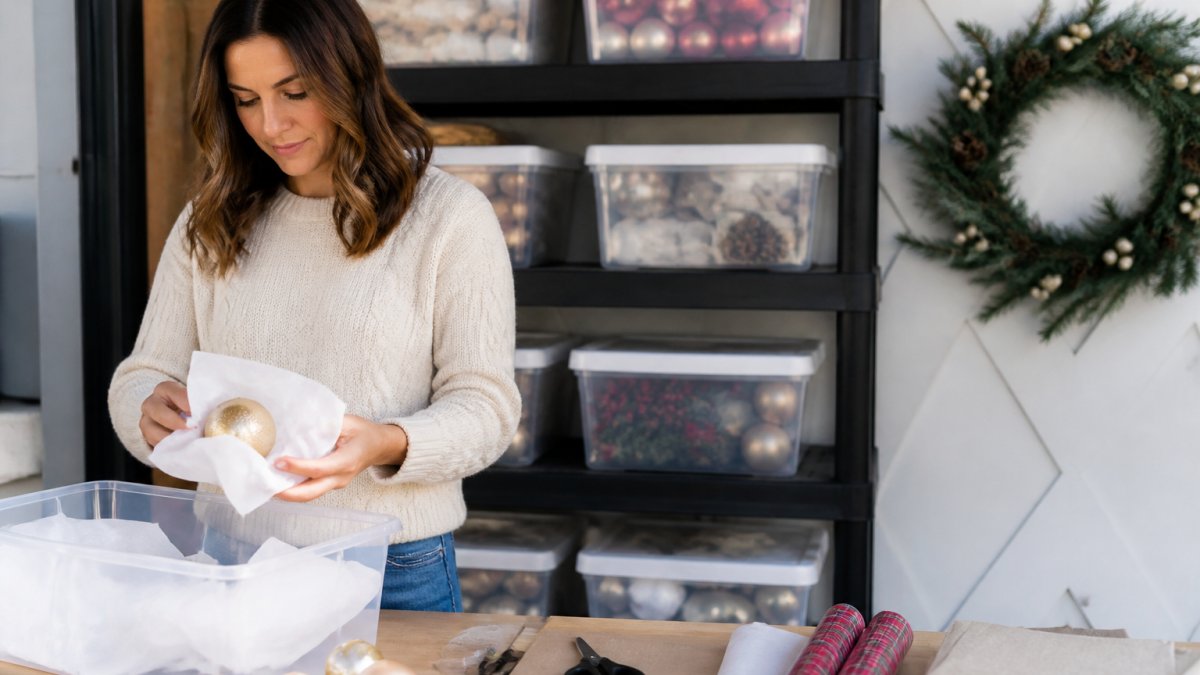
For small spaces, use under-bed bins or stackable storage boxes that fit closet shelves. Label the side facing out so you can read it without moving the bin. Keep a master list of what you own on your phone so you can check it before shopping.
A seasonal inventory list also helps you edit your collection. If an item hasn't been displayed in two years, consider donating it. Fewer, better items are easier to store and more likely to be reused.
Storage space is part of the cost of seasonal decor. If you cannot store it well, you cannot reuse it, and reuse is where the value lives. A simple inventory system is the difference between a collection that grows in value and one that grows in clutter.
A Step-by-Step Buying and Decorating Workflow
Follow this workflow and you will buy less, reuse more, and decorate faster each year.
- Audit your existing decor and photograph it.
- Set a budget per season, not per item.
- Run the value test on anything new.
- Buy one anchor piece per season, not a full haul.
- Layer seasonal accents over permanent decor.
- Style two display areas first, then stop.
- Store and label everything the same week you take it down.
The 70-Piece Shatterproof Christmas Tree Ornament Set fits this workflow well. It gives you a coordinated base in one purchase, so you add keepsakes and ribbon rather than hunting for dozens of matching pieces.
Small-Space and Renter Solutions for Seasonal Decor
Renters and small-space dwellers should lean on textiles and hanging pieces, because both store flat and leave no marks.
Try these:
- Swap throw pillows, throws, and rugs instead of buying furniture accents.
- Use hanging plants and window boxes for seasonal color.
- Choose a wreath over a full mantel display.
- Pick one shelf vignette instead of room-wide styling.
- Store off-season items in under-bed bins.
Our Autumn Elegance Peony & Maple Leaf Wreath works for this approach. At roughly 15.7 inches, it fits a door or wall without demanding floor space, and it stores flat.

Renters and apartment dwellers who want seasonal impact without wall damage or bulky storage.
Conclusion
The hardest part of seasonal decorating is not finding beautiful pieces. It is knowing which ones earn their place in your home year after year.
Sleigh All Day curates seasonal collections designed for exactly that kind of reuse, from coordinated ornament sets to wreaths built to last. Every order over $75 ships free, so you can build a collection slowly instead of all at once.
Shop the magic with Sleigh All Day and start a seasonal collection you will still love next year.
Frequently Asked Questions
How do you make seasonal decor worth the money?
Run every piece through three questions before you buy: will I use it at least three seasons, does it fit a color palette I already own, and do I have a place to store it? A $39.99 30-piece ornament set used across three Christmases works out to roughly $13 per season, which is a far better return than a single-use novelty item that gets tossed in March. Reusable items with neutral tones and sturdy materials almost always beat trend-driven pieces on value.
What seasonal decorations can you reuse year after year?
Shatterproof ornaments, faux floral wreaths, throw pillows, throws, rugs, and potted plants are the strongest repeat performers. A shatterproof ornament collection survives being packed and unpacked, and a faux peony and maple leaf wreath moves from the front door to the entryway wall without shedding. Textiles and faux foliage hold up because they don't depend on a single holiday. Skip anything paper, overly trendy, or sized for one specific mantel and you'll get years of use.
How do you decorate for the seasons without buying new things?
Shop your own storage first. Pull out what you already own, group it by season, and build small vignettes on a tray, shelf, or entry table instead of covering every surface. Swap pillows, throws, and rugs rather than replacing furniture. Add natural elements like foliage, gourds, or potted plants for a fresh look at almost no cost. Rotating the same 15 to 20 pieces through different display areas gives you a new room each season without spending anything.
When should you buy seasonal decor to get the best value?
Buy at the end of a season for deep discounts, but only if the piece is neutral enough to use again. Buy at the start of a season for the full selection and the pieces you actually need. The middle ground that works best: shop clearance for classic items like ornaments and wreaths, and pay full price only for a specific color or motif you've planned around. Buying off-season means storing items for months, so factor in storage space before you commit.
